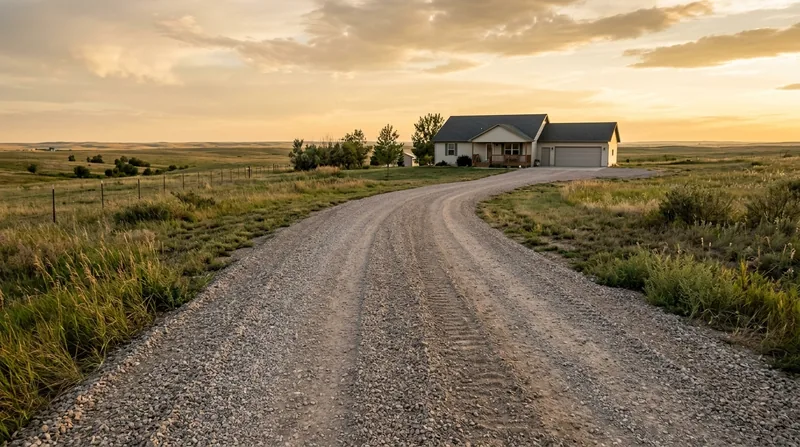




Gravel Driveway Installation & Grading in Rapid City is foundational work that separates a drive that sheds water and holds together from one that washes out every spring. Rapid City's rural approaches toward Box Elder and Black Hawk sit on Spearfish sandy soils that drain fast and shift under traffic, and the Chinook wind cycles that swing us from thaw to freeze in the same week open washboard ruts and surface erosion in uncompacted base. We shape the grade, build proper crown for drainage, compact fresh aggregate to bearing, and deliver a stable platform that either supports new asphalt later or functions as a solid gravel surface for years. Since 2009, we have graded and graveled approaches across Pennington and Meade counties, reading soil behavior and winter runoff patterns the way this landscape actually works. This is not landscaping or general earthwork: it is the structural base that everything else sits on, and it costs less to get it right the first time than to patch washouts and reset crowned gravel every two seasons.
Why Proper Grading and Gravel Matter in Rapid City's Rural and Hillside Terrain
Rapid City's residential paving work spans creek terraces with flat rectangular lots, mid-century ranch blocks with straight-in drives, and west-side hillside homes where steep angles force real pitch control. The soils underneath are equally varied: expansive Pierre Shale clay on the east side swells and shrinks with rain, red sandy Spearfish soils along the valley wash out fast under traffic and melt, and rocky alluvium near Rapid Creek resists compaction. A gravel driveway that does not account for these differences becomes a maintenance nightmare within one winter cycle.
- We identify soil type and drainage behavior before laying any base, because sand and clay compact and shed water differently.
- We build crown (a gentle peak down the center line) so water runs off the surface instead of pooling and softening the base.
- We compact aggregate in lifts using proof-rolling and visual inspection, not guesswork, so the drive holds under traffic and seasonal freeze-thaw.
- We use recycled asphalt millings or fresh crushed stone depending on your budget and long-term use, and we specify tonnage on the estimate so you know what you are getting.
Proper grading is the difference between a drive that lasts five years and one that needs rework every spring.
Key info: Rapid City's Chinook winds and freeze-thaw cycles are the enemy of uncompacted gravel. A homeowner on a hillside lot in Summerset or a rural approach toward Black Hawk will see surface washboard and rut development within weeks if the base is not properly crowned and compacted. We grade to shed that water before it ever reaches the base.
For more on how base preparation supports long-term driveway performance, see our guide to asphalt driveway paving and installation, where gravel foundation work is the first step.
How We Grade and Install Gravel Driveways in Rapid City
Our process begins with a site visit to understand the lot's slope, drainage patterns, and soil composition. We then remove or regrade existing material, establish proper crown and edge lines, bring in compacted base aggregate, and finish with a stable wearing surface. The entire job is coordinated to local permitting rules (which vary by municipality) and to South Dakota 811 utility locates if excavation is involved.
- We verify utility locations through South Dakota 811 before any digging, because gas, water, and electric lines run under many Rapid City driveways.
- We establish grade and slope by laser level or transit, then remove soft or unsuitable material down to firm soil.
- We compact the subgrade, then add and compact a base course of recycled asphalt millings or crushed stone in 4 to 6 inch lifts.
- We build crown (typically 2 to 4 percent slope from center to edge) and compact the wearing surface so water sheds and the drive holds under traffic.
- We provide a written estimate that specifies tonnage, material type, and expected finish, so there are no surprises.
The entire timeline depends on lot size and existing conditions, but most gravel driveway work in Rapid City takes one to two days on a residential property.
Example: A homeowner on a 200-foot approach in Piedmont with soft red sandy soil and poor drainage needed the drive completely regraded and graveled. We removed the existing material, compacted the subgrade, brought in 40 tons of recycled asphalt millings, built proper crown, and finished with a 4-inch wearing course of crushed stone. The job took one full day and cost under $2,400. Two years later, the drive still sheds water and shows no significant ruts.
If you are planning future asphalt resurfacing or overlay work, proper gravel grading now saves you money on base repair later.
Gravel Driveway Installation & Grading Methods and Materials
| Approach | Description | Best for |
|---|---|---|
| Recycled Asphalt Millings | Crushed asphalt reclaimed from milling operations, compacted in lifts with water or light rolling. Binds over time as fines and residual binder knit together. | Budget-conscious rural approaches, long-term stable drives where the binder cost is low and compaction is done right. |
| Crushed Stone and Gravel | Angular crushed limestone or granite, graded in size to compact tight. No binder, relies on shape and weight to lock. Requires ongoing topping and raking. | Temporary or short-term drives, rural properties where a working gravel surface is acceptable and cost per ton is the only metric. |
| Tar and Chip | Recycled asphalt binder sprayed onto stone and compacted, creating a semi-rigid wearing surface that is neither asphalt nor gravel. Lower cost than hot mix asphalt. | Homeowners seeking a step up from loose gravel without the full cost of asphalt, on rural or private approaches where municipal restrictions do not apply. |
| Transition to Asphalt | Properly graded and compacted gravel base becomes the foundation for hot mix asphalt overlay or new paving later. Saves rework and base replacement cost. | Homeowners planning future asphalt paving, or those who want a proven base before committing to the full cost of new hot mix asphalt. |
Gravel Driveway Installation & Grading Cost in Rapid City: What to Expect
Gravel driveway grading and installation in Rapid City starts at around $950 for a modest 100-foot rural approach with good existing grade and simple soil conditions. Most residential jobs in the Rapid City area run between $1,200 and $3,500, depending on lot size, slope, soil type, and material choice. A hillside lot requiring significant regrading, poor sandy soil needing deeper base work, or a long approach toward Box Elder will cost more. The single largest factor is tonnage: we measure your driveway, calculate the volume needed, and quote material plus labor as a single line item with tonnage specified on the estimate.
Why estimates vary so widely: a flat 150-foot drive on clay soil with good drainage might need 25 tons of material and cost $1,400. The same length on a west-facing hillside with Spearfish sand and poor native compaction might need 40 tons, regrading labor, and extra compaction passes, pushing the total to $2,600. Recycled asphalt millings cost less per ton than fresh crushed stone, but both are competitive. If you are planning future asphalt paving, a solid gravel base now saves you money on base repair during the overlay, so the cost is an investment in durability.
We provide free written estimates that break down material, tonnage, labor, and timeline. Call (605) 608-4922 or visit our pricing page for detailed cost guidance and recent project examples.
Gravel Driveway Installation & Grading Near Me: What Rapid City Homeowners Should Know When Hiring
Hiring a contractor for gravel driveway work is straightforward if you know what to ask. The most important step is getting multiple estimates (at least two) from contractors who will visit your site, measure the area, identify soil type, and provide written tonnage and material specifications. Avoid any contractor who quotes over the phone without seeing the lot, or who offers a price per square foot without knowing slope, soil, or drainage conditions. Ask for references from recent work in Rapid City or nearby areas, and verify that the contractor understands local permitting (which varies by municipality) and South Dakota 811 utility locates before digging.
- Request a written estimate that includes material type, tonnage, compaction method, and timeline before you commit to anything.
- Ask whether the contractor will pull the South Dakota 811 utility locate or whether you need to do it yourself, because excavation work requires it by law.
- Verify whether your municipality requires a driveway permit for grading or gravel work, and ask the contractor to help you navigate the process.
- Check if your HOA (if applicable) has architectural standards for driveway materials or finish, because some master-planned communities restrict gravel surfaces or require asphalt.
- Ask for a warranty on compaction and grading work, typically one to two years on the installation itself.
A local contractor who has worked in Rapid City for years will understand the soil patterns, weather cycles, and permitting rules that affect your specific lot. For a free estimate and honest guidance on whether gravel, tar and chip, or asphalt is the right choice for your property, contact us or call (605) 608-4922.
Gravel Driveway Installation & Grading in Rapid City: Pricing Guide
| Service | Price | Details |
|---|---|---|
| Small residential approach (100-150 feet, simple grading) | Starting at $950 | Includes site visit, grading, 20-25 tons recycled asphalt or crushed stone, compaction, and crown |
| Standard driveway (150-250 feet, moderate slope or soil work) | Starting at $1,600 | Includes utility locate, regrading, 30-40 tons material, compaction lifts, and drainage crown |
| Hillside or complex lot (steep slope, poor soil, long approach) | Starting at $2,400 | Includes subgrade removal, 40-60 tons recycled asphalt or stone, proof rolling, compaction, and extended grading |
| Large or multi-section project (parking area, rural road segment) | On estimate | Site visit required to measure, assess soil and drainage, specify tonnage and compaction method |
| Material upgrade (tar and chip overlay or transitional asphalt prep) | Starting at $1,200 | Graded gravel base plus tar and chip or primer course, positioned as foundation for future asphalt |
| Free estimate and utility locate coordination | No charge | Response within 24 hours at (605) 608-4922, written spec with tonnage and timeline |
Indicative pricing, the exact cost depends on square footage, finish, and site access. Free personalized estimate within 24h at (605) 608-4922.


