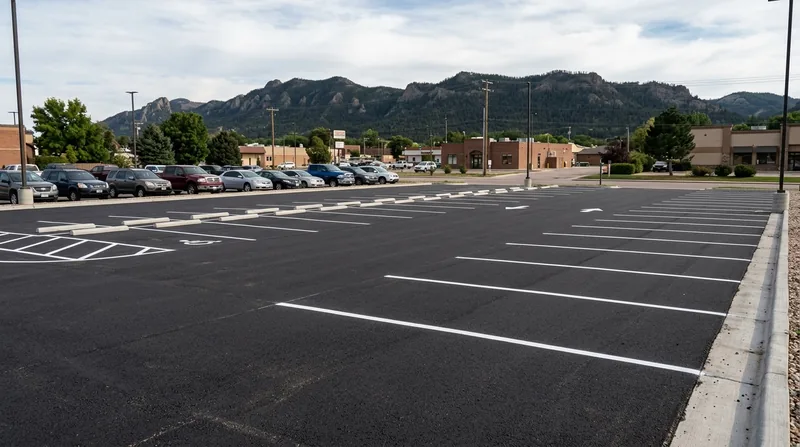




Parking Lot Paving & Construction in Rapid City takes a direct hit from spring hail, heavy tourist season traffic, and the freeze-thaw cycles that crack and heave asphalt across Pennington County. Commercial lots in downtown Rapid City, Box Elder, and the Black Hills corridor see year-round wear from delivery trucks, seasonal visitor volume, and the expansive clay soils that shift underneath older subdivisions. We build parking lots with the aggregate base pushed past the 42-inch frost depth, lay hot mix binder and surface courses sized for the traffic load, and design drainage to shed the runoff that opens potholes and edge failure in spring. A solid parking lot is the first impression your business makes, and it holds value longer than a hastily patched surface that fails in sections every season.
Why Parking Lot Paving & Construction Matters in Rapid City's Commercial Districts
Rapid City's commercial core, from downtown through the retail strips along Mount Rushmore Road and out toward Box Elder, runs on asphalt surfaces that carry everything from daily foot traffic to heavy delivery schedules. The soils underneath vary sharply: expansive Pierre Shale clay on the east side swells and shrinks with every rain, red sandy Spearfish soils along the valley settle differently, and rocky alluvium near Rapid Creek resists compaction and demands a heavier base. Spring hail loads and the Chinook winds that swing temperatures from thaw to freeze in the same week open alligator cracking and edge failure in asphalt that was never built with proper drainage or base depth. A parking lot that holds up in Rapid City is not the same as one built in a stable climate, and the money spent on a proper base is the money that keeps you out of pothole repair and resurfacing bills every two or three years.
- We build the aggregate base to frost depth and proof-roll it to catch soft spots before asphalt goes down.
- We size hot mix binder and surface courses for the traffic volume and seasonal loads your lot actually carries.
- We design drainage and pitch to shed water off the surface and away from the base, cutting the spring thaw failures that plague shallow or poorly sloped lots.
- We pull site plans and work with your local building department on permits, right-of-way requirements, and stormwater compliance.
A parking lot built to these standards holds for 15 to 20 years with routine maintenance, while a thin overlay over a failed base lasts three to five years and costs more in the long run.
Key info: Rapid City's municipal building department and Pennington County health department both govern parking lot construction, including impervious surface limits, stormwater detention, and ADA accessible parking and accessible routes. Verify requirements for your specific site at the city or county level before design begins, and check your HOA architectural standards if your lot is in a master-planned community like Summerset or Blackhawk.
How We Build a Parking Lot in Rapid City: From Site to Finished Surface
A parking lot is not just asphalt poured over dirt. We start with a site visit to measure the lot, check drainage patterns, probe the soil and base depth, and identify any utilities that need locating under South Dakota 811 law before any excavation begins. We then grade the site to the slopes your lot needs for water to run off, haul in and compact the aggregate base in lifts, and lay hot mix asphalt in binder and surface courses. Every step is timed to the season: we do not pave when the ground is frozen or when rain is forecast within 24 hours of laying the surface course. The result is a lot that sheds water, carries the traffic load, and lasts.
- We visit the site, measure the lot, check drainage and existing base depth, and verify utilities with a South Dakota 811 locate.
- We remove failed asphalt or old pavement if needed, haul it to recycling, and grade the subgrade to the slopes your lot requires.
- We haul in and compact the aggregate base in lifts, proof-roll it to confirm it will hold traffic, and adjust drainage as needed.
- We lay hot mix asphalt in a binder course, then a surface course, and finish with line painting and striping to code.
- We provide a written estimate with tonnage, course thickness, and base specs so you know what you are getting.
A parking lot built this way is ready for traffic as soon as the asphalt cools, which takes 24 to 48 hours in normal weather. Do not seal the surface for the first six to twelve months while the asphalt cures and hardens.
Real example: A retail plaza in Colonial Pine Hills needed a 12,000-square-foot lot rebuilt after a failed base caused edge cracking and potholes every spring. We removed the old asphalt, brought in 18 inches of compacted aggregate, and laid a 2-inch binder and 1.5-inch surface course. The lot has held for eight years with routine seal-coat maintenance and no patching. Total cost was higher than a thin overlay would have been, but the overlay would have failed in three years and cost more in the long run.
Parking Lot Construction Methods and Approaches
| Approach | Description | Best for |
|---|---|---|
| Full-Depth Reconstruction | Remove failed asphalt and base, rebuild aggregate base to frost depth, compact in lifts, lay new hot mix binder and surface. | Lots with failed bases, poor drainage, or severe alligator cracking; new construction on soft soils. |
| Mill and Overlay | Mill off 1.5 to 2 inches of old asphalt, compact the exposed layer, and lay a new surface course. | Lots with sound bases and less than 30 percent surface failure; cosmetic refresh and minor structural upgrade. |
| Asphalt Patching and Repair | Cut out failed areas, remove unstable base if present, fill with hot mix asphalt, and compact to the surrounding surface. | Isolated potholes, edge failures, and seasonal damage; temporary fix before a larger resurfacing or reconstruction. |
| Recycled Asphalt Millings Base | Grade the site, lay recycled asphalt millings as a compacted base layer, then overlay with new hot mix or tar and chip. | Low-traffic lots, rural parking, or budget-conscious projects where the base does not need to carry heavy truck loads. |
Parking Lot Paving & Construction Cost in Rapid City: What to Expect
A new parking lot in Rapid City starts with a free commercial estimate that includes site measurement, soil and base inspection, and a written quote with tonnage, course thickness, and base specifications. The cost depends on the lot size, the depth and condition of the existing base, the soil type underneath, drainage requirements, and whether you need milling or full-depth removal. A 5,000-square-foot lot with a sound base and a mill-and-overlay approach costs less than a new 5,000-square-foot lot built from the subgrade up on expansive clay soils. Spring hail damage, edge failure, and pothole repair are emergency calls that cost less per square foot than a full reconstruction but more than routine maintenance, and they are the most common entry point for commercial customers in Rapid City.
We recommend getting two or three estimates from contractors who measure on site and provide written tonnage and thickness specs. A price that is too low, an estimate with no thickness or base depth listed, or a contractor who shows up in out-of-state plates and wants a cash deposit before starting is a red flag. See our full pricing overview for typical ranges and the factors that move a quote up or down, and call us at (605) 608-4922 for a free site estimate with no obligation to book.
What to Look for When Hiring a Parking Lot Paving Contractor Near Rapid City
Parking lot paving is a high-ticket job, and the difference between a contractor who builds to frost depth and one who cuts corners is the difference between a lot that lasts 15 years and one that fails in five. A local contractor with a Rapid City address and local plates is a stronger signal than a traveling crew that shows up unsolicited with leftover asphalt from a job nearby. Verify that the contractor is fully insured, ask for references from recent commercial jobs in Rapid City or Colonial Pine Hills, and request a written estimate that includes site measurement, aggregate base depth, hot mix tonnage, and course thickness. Check your local building department and your HOA architectural standards to confirm what permits and approvals are required, and make sure the contractor understands those rules before they start. For more information on how to evaluate a paving contractor and what to ask, contact us at (605) 608-4922 for a free estimate and site consultation.
Parking Lot Paving & Construction in Rapid City: Pricing Guide
| Service | Price | Details |
|---|---|---|
| Free commercial estimate | Free | Site measurement, soil and base inspection, written quote with tonnage and thickness specs |
| Mill and overlay (sound base, under 30 percent failure) | Starting at $1.50 to $2.50 per square foot | Depends on lot size, milling depth, and overlay thickness; larger lots cost less per square foot |
| Full-depth reconstruction (failed base or new construction) | Starting at $3.00 to $5.00 per square foot | Includes base removal, aggregate base to frost depth, binder and surface courses; soil type and drainage complexity move the price |
| Pothole repair and patching | Starting at $150 to $500 per patch | Depends on hole size, base condition, and access; seasonal spring damage is the most common call |
| Travel and site visit | Included | No separate mileage charge or call-out fee in Rapid City and surrounding service areas |
| Estimate turnaround | Free | Response within 24 hours at (605) 608-4922; no obligation to book after estimate is provided |
Indicative pricing, the exact cost depends on square footage, finish, and site access. Free personalized estimate within 24h at (605) 608-4922.


