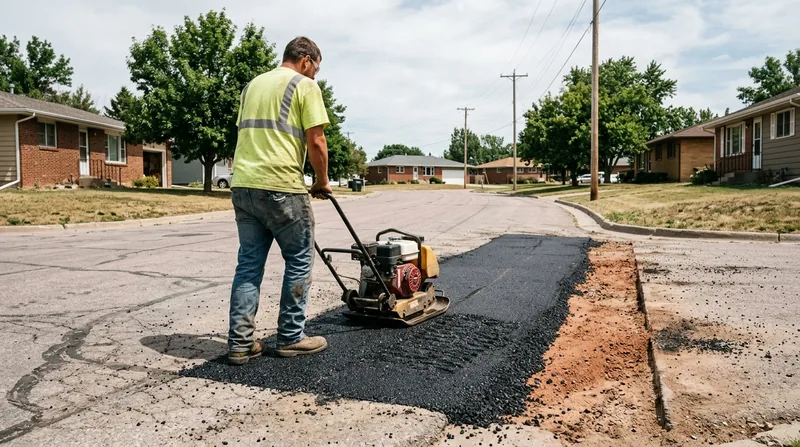




Pothole Repair & Asphalt Patching in Rapid City is one of the most common fixes we handle every spring, when freeze-thaw cycles and Chinook wind swings break apart worn asphalt surfaces across the city's neighborhoods. Rapid City's terrain runs from flat creek-terrace blocks in the historic core through mid-century ranch subdivisions to hillside lots climbing the western slopes, and every one of them sees potholes open up once the winter weather starts its seasonal assault. The expansive clay soils weathered from Pierre Shale on the east side swell and shrink with every rain, while the red sandy Spearfish soils along the valley behave differently again, and rocky alluvium near Rapid Creek adds its own compaction challenges underneath. When hail and runoff wash out the surface layer, or when thaw and freeze cycles crack the asphalt, water seeps into the base and creates voids that collapse into potholes. We saw-cut the damaged area, remove the broken material, compact fresh aggregate base, and set a hot mix patch flush with the surrounding surface, restoring safety and stopping further damage. For larger areas with scattered failures across thirty to forty percent or more of the surface, asphalt resurfacing or overlay is often a smarter investment than patching.
Why Pothole Repair Matters in Rapid City's Spring Thaw Cycle
Rapid City potholes form fast once spring arrives, and they get worse every week you wait. The city's climate swings from hard freeze to rapid thaw in the same week, and that cycle pumps water into cracks in the asphalt, where it freezes, expands, and breaks the surface apart. Hail is common in spring and summer, and heavy runoff from hillside lots and from the creek terraces pounds the shoulders of driveways and parking lot edges. A pothole that starts as a three-inch chip in March can become a six-inch crater by May if water keeps working underneath, and at that point a patch is just a temporary fix. The real cost comes from ignoring it: water that seeps into the base layer destabilizes the whole driveway structure, and what started as a pothole repair becomes a resurfacing or replacement job.
- We identify the full extent of the damage by probing the edges of the break to see whether the base is still solid or has failed.
- Small isolated potholes are patched with hot mix asphalt and compacted to match the surrounding surface.
- Multiple potholes or scattered failures across a significant portion of the surface signal that the asphalt is near the end of its life and resurfacing will last longer than patching.
- We document the repair and tonnage used so you have a record for insurance or HOA documentation if needed.
Addressing potholes early keeps them from spreading and saves money in the long run.
Key info: Rapid City's freeze-thaw cycles are aggressive. A pothole ignored for one full winter season can double in size and damage the base layer underneath, turning a repair into a resurfacing. Spring is the best time to call, before thaw and runoff season opens new failures.
For more context on when repair makes sense and when a larger surface fix is needed, see our guide to driveway repair in Rapid City.
How We Repair Potholes and Patch Asphalt in Rapid City
Our patching method is straightforward and built for Rapid City's climate. We start by saw-cutting a clean perimeter around the damaged area so the patch has a solid edge to bond to, then we remove all the broken asphalt and any weak base material underneath. We inspect the subgrade to make sure it is stable, add or replace compacted aggregate base as needed, and then set a hot mix asphalt patch that we compact flush with the surrounding surface. The patch is ready to drive on immediately after it cools, which usually takes a few hours in cold weather and less in warm weather. For larger areas with multiple failures, we assess whether patching makes sense or whether the driveway would benefit more from a full resurfacing.
- We saw-cut the damaged area with a precision blade to create clean edges and a tight bond with the new material.
- We remove all broken asphalt and probe the base to confirm it is solid and not saturated with water.
- We add compacted aggregate base material where needed to restore proper thickness and drainage slope.
- We set hot mix asphalt patch material and compact it to match the density and height of the surrounding surface.
- The patch is ready for traffic once it cools, typically within hours depending on air temperature.
This method stops water infiltration and restores the structural integrity of the surface, preventing the pothole from reopening.
Local example: A homeowner on the west side of Rapid City near the hillside neighborhoods had three potholes open in her driveway apron after a heavy spring thaw. We patched all three in one visit, compacting the base and setting the hot mix flush with the existing surface. The patches held through the following winter, and she chose to resurface the entire driveway the next year rather than patch again. That sequence is typical for driveways in that terrain.
Learn more about asphalt resurfacing and overlay options if your driveway has multiple problem areas.
Pothole Repair Methods and Approaches
| Method | Description | Best For |
|---|---|---|
| Hot Mix Patch | Saw-cut perimeter, remove damaged material and base, compact new aggregate, set hot mix asphalt and finish flush with surface. | Single or scattered potholes in otherwise sound driveways, parking lot repairs, immediate traffic readiness. |
| Full-Depth Patch | Remove all asphalt and base material down to subgrade, rebuild the full section with compacted aggregate and new asphalt. | Potholes with failed or saturated base, areas where water has undermined the structure, spots prone to repeated failure. |
| Temporary Pothole Fill | Cold patch material applied quickly for emergency safety; not a permanent repair and will break apart under traffic. | Emergency situations where a permanent repair cannot be done immediately; always followed by a hot mix patch within days or weeks. |
| Resurfacing (Overlay) | Mill or grind the top layer of asphalt, then apply a new asphalt layer across the entire surface to cover scattered potholes and cracks. | Multiple potholes, alligator cracking, or failures across thirty percent or more of the surface; more cost-effective than multiple patches. |
Pothole Repair & Asphalt Patching Cost in Rapid City: What to Expect
Most single pothole repairs in Rapid City start at around $450 to $650, depending on the size of the damaged area, the depth of the failure, and whether the base material needs replacement. A pothole that is three to four inches across and two inches deep is a straightforward patch that sits at the lower end of that range. If the pothole is larger, or if the base underneath is saturated or has failed, the cost moves up because we need to remove more material and rebuild more of the foundation. Multiple potholes in the same driveway can often be done in one trip, which is more efficient than separate visits. Parking lot repairs with several potholes may run higher depending on the total area and traffic patterns.
The best way to understand the cost for your specific situation is to request a free estimate, which includes a site visit, measurement, and a written quote with tonnage and material specs. We respond within 24 hours at (605) 608-4922, and there is no obligation to book. Factors that affect the final price include the size and depth of each pothole, the condition of the base layer, access for equipment, and whether the driveway or parking lot is steep or level. If you have multiple potholes or extensive surface cracking across a large area, resurfacing may be more cost-effective than patching, and we will explain that trade-off in the estimate.
For a complete pricing overview and details on other services, visit our pricing page.
What to Look for When Hiring a Paving Contractor Near Me in Rapid City
Choosing the right contractor for pothole repair and asphalt patching in Rapid City is about verifying credentials, getting multiple estimates, and understanding what you are paying for. A good contractor will give you a written estimate that specifies the size of the repair area, the tonnage of material, the depth of the patch, and a clear price. Ask whether the estimate includes compaction of the base layer, because that is where the durability of the patch comes from. You should always ask to see proof of insurance, and you should verify with the City of Rapid City or your local village whether a permit is required for your driveway or parking lot work. Some municipalities require a driveway approach permit, and rules vary from place to place, so confirm with your building department before you book.
- Get written estimates from at least two or three contractors so you understand the range and can compare the scope of work.
- Ask each contractor to specify the tonnage of asphalt, the depth of the patch, and whether the base will be compacted and inspected.
- Request proof of insurance and ask whether the contractor carries workers compensation and general liability coverage.
- Confirm with your local building department or HOA whether a permit is required for your driveway or parking lot repair.
- Check references from recent pothole repair or patching work, and ask about how long the patches have held.
- Avoid any contractor who offers a price over the phone without seeing the site, demands a large cash deposit before starting work, or has out-of-state plates and no local address.
A local contractor with a local address and a reputation in Rapid City is your best assurance of honest work and follow-up if anything goes wrong. Contact us for a free estimate and to discuss your repair needs.
Pothole Repair & Asphalt Patching in Rapid City: Pricing Guide
| Service | Price | Details |
|---|---|---|
| Single pothole patch | Starting at $450 | Includes saw-cut perimeter, removal of damaged material, base inspection and compaction, hot mix patch set flush with surface |
| Multiple potholes (2-4 in same driveway) | Starting at $650 | Efficient same-trip repair; price per pothole decreases with volume, depending on spacing and base condition |
| Large pothole or full-depth repair | Starting at $800 | Required when base is saturated or failed; includes complete removal and rebuild of asphalt and aggregate layers |
| Parking lot pothole repair (per location) | Starting at $550 | Includes traffic safety considerations and compaction standards; multiple potholes quoted as package after site visit |
| Free estimate | No charge | Site visit, measurement, written quote with tonnage and material specs, response within 24 hours at (605) 608-4922 |
Indicative pricing, the exact cost depends on square footage, finish, and site access. Free personalized estimate within 24h at (605) 608-4922.


