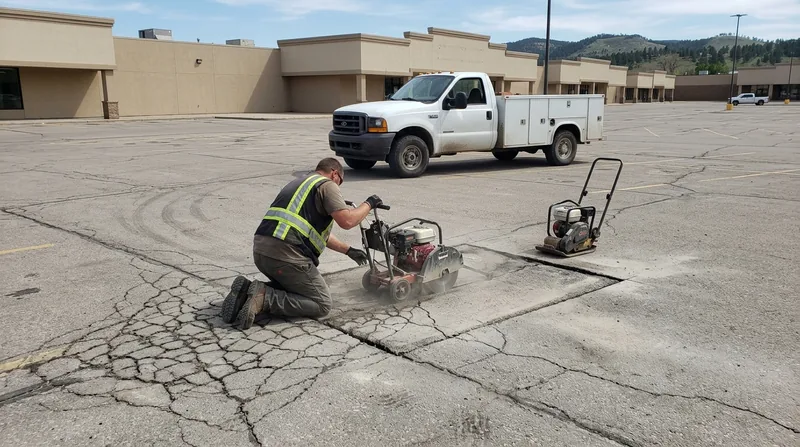




Parking Lot Repair & Resurfacing in Rapid City stops the cycle of freeze-thaw cracking that chinook winds and Pennington County winters drive into unconfined asphalt bases. Rapid City's parking lots sit over expansive clay, red sandy soils, and rocky alluvium that shift with every temperature swing. When the ground moves, the asphalt above it alligator-cracks, potholes open, and water finds its way underneath. We cut out the failed section, rebuild the base to proper compaction and drainage, and patch it flush so it holds through the next season. Whether your lot is in the historic downtown core, a mid-century commercial strip, or one of the newer subdivisions pushing toward Box Elder, the repair approach is the same: identify what failed, why it failed, and fix it so the money stays in your pocket instead of your next resurfacing bill.
Why Parking Lot Repair Matters in Rapid City: Base Movement and the Chinook Effect
Rapid City's climate is the enemy of unconfined asphalt bases. Chinook winds swing temperatures from thaw to freeze in the same week, and the ground underneath your lot responds by expanding and contracting. Expansive clay weathered from the Pierre Shale swells when wet and shrinks when dry, lifting and settling the asphalt above it. When the base moves, the surface cracks. When water enters those cracks, the base fails faster. A pothole that starts small in March becomes a crater by June if the base is compromised. Patching the surface alone does not fix a base problem, which is why we assess the full depth before recommending a repair strategy.
- We identify whether cracking is surface-level or base-deep by visual inspection and core sampling if needed.
- We remove failed asphalt and base material down to stable ground, then rebuild with compacted aggregate sized for Rapid City's 42-inch frost depth.
- We reset the patch flush with the surrounding surface so water sheds away instead of pooling at the edge.
- We compact the new base in lifts to eliminate voids that trap moisture and invite future heave.
A parking lot that is repaired correctly holds through multiple freeze-thaw cycles and stops the spiral of patching, patching again, and finally resurfacing the whole lot.
Key info: In Rapid City and Box Elder, alligator cracking that covers more than 30 to 40 percent of the parking surface means the base is gone. Patching at that scale throws money away. Resurfacing the whole lot is the smarter move.
For more information on how base problems develop and what repair versus resurfacing looks like, see our guide to Asphalt Resurfacing & Overlay.
How We Repair and Resurface Parking Lots in Rapid City: The Step-by-Step Process
Parking lot repair starts with a walk-through. We measure the failed area, check the depth of cracking, probe the base, and look at the overall condition of the surrounding asphalt. If the lot is failing in multiple spots or if cracking is extensive, we may recommend resurfacing the whole surface instead of spot repairs. If the damage is localized, we cut out the bad section, rebuild the base, and patch it in. The goal is always to spend your money where it solves the problem, not where it buys time.
- We mark out the failed area and cut clean edges so the new patch bonds to the old asphalt.
- We remove all cracked asphalt and unstable base material down to firm ground.
- We compact new aggregate base in two or three lifts, proof-rolling with heavy equipment to ensure no voids remain.
- We lay hot mix asphalt at the correct thickness and temperature, finishing it flush with the surrounding surface.
- We allow the patch to cure before opening the lot to traffic, typically 24 to 48 hours in Rapid City's spring and fall weather.
The repair is complete when the patch is indistinguishable from the surrounding lot and water runs off it instead of pooling or seeping underneath.
Local example: A small retail lot in Summerset with three potholes and minor alligator cracking around the perimeter is a good candidate for spot repair. A commercial lot in Rapid City's downtown that shows alligator cracking across 40 percent of the surface and multiple potholes is better served by a full resurfacing, which costs less per square foot than patching the whole thing piecemeal.
See our Pothole Repair & Asphalt Patching page for more on how we handle individual pothole repairs and what distinguishes a pothole from base failure.
Parking Lot Repair Methods: Patching, Overlay, and Full Resurfacing
| Approach | Description | Best for |
|---|---|---|
| Full-Depth Patch | We remove failed asphalt and base down to stable ground, compact new aggregate, and lay new hot mix asphalt flush with the surrounding surface. | Localized potholes, alligator cracking in one area, base failure under a section of the lot. |
| Mill and Overlay | We mill off the top 1.5 to 2 inches of existing asphalt, removing surface cracking and restoring drainage, then lay new asphalt over the existing base. | Surface cracking and minor alligator patterns when the base is still sound and the lot does not have widespread potholes. |
| Full Resurfacing | We mill the entire lot to remove all old asphalt, inspect and repair the base as needed, and lay a new surface course. | Extensive alligator cracking, multiple potholes across the lot, or when base failure is suspected under 30 percent or more of the surface. |
| Recycled Asphalt Base Repair | We use recycled asphalt millings as a compacted base layer in the repair patch, reducing material cost while maintaining compaction and drainage. | Budget-conscious repairs in Rapid City and surrounding areas where recycled material is available and compaction standards are met. |
Parking Lot Repair & Resurfacing Cost in Rapid City: What to Expect
Parking lot repair costs depend on the size of the failed area, the depth of the damage, and whether the base needs full replacement or just compaction. A single pothole repair starts around $650 to $800, including the excavation, base compaction, and new asphalt. A patch covering 100 to 200 square feet runs $1,200 to $2,000. A full resurfacing of a 5,000-square-foot lot ranges from $5,000 to $10,000, depending on the condition of the base and whether milling is required. The wider your lot, the lower the cost per square foot, because the fixed costs of equipment setup and mobilization spread across more area.
The biggest cost drivers are the size of the failed area, the condition of the base underneath, and whether you need new aggregate brought in or can use recycled material from the milling. Access matters too. A parking lot on a main street in Rapid City is easier and faster to repair than a lot up a steep hillside in Blackhawk or Sturgis, where equipment takes longer to position. We provide a written estimate that lists the square footage, the tonnage of materials, and the repair method so you know exactly what you are paying for and why.
For a detailed pricing breakdown and to discuss your specific lot, contact us at (605) 608-4922 or visit our pricing page for a free estimate.
What to Look for When Hiring a Parking Lot Paving Contractor Near Me in Rapid City
Hiring the right contractor for parking lot repair is about verifying three things: that the company is local and insured, that the estimate includes tonnage and thickness specifications, and that you understand what is and is not included in the repair. A contractor who shows up with a written estimate that lists the square footage, the aggregate base specification, the asphalt thickness, and the equipment used is someone who knows the trade. A contractor who gives you a price with no detail and asks for a large cash deposit is a contractor to avoid. Ask for references from other commercial property owners in Rapid City, Colonial Pine Hills, or Box Elder. Call them and ask whether the repair held through the winter and whether the contractor was easy to work with.
Check whether your lot is in a jurisdiction that requires a permit for parking lot work. The City of Rapid City has rules for stormwater and impervious surface limits that may apply to your project. If your lot is part of an HOA or a master-planned community, check the architectural standards before you start. We help you navigate local permitting, but the rules vary by municipality, so verification is always your responsibility. Fully insured contractors carry liability and workers' compensation coverage, and most reputable shops will provide a certificate on request.
For a free estimate and to discuss your specific parking lot, contact us at (605) 608-4922. We respond within 24 hours and provide a written quote with no obligation to book.
Parking Lot Repair & Resurfacing in Rapid City: Pricing Guide
| Service | Price | Details |
|---|---|---|
| Single pothole or small patch repair | Starting at $650 | Excavation, base compaction, and new asphalt for one pothole or small localized failure up to 50 square feet |
| Medium patch repair (100 to 250 sq ft) | Starting at $1,200 | Full-depth excavation, aggregate base rebuild, and new asphalt layer for alligator cracking or base failure in a defined section |
| Mill and overlay resurfacing | Starting at $3,500 | Milling existing asphalt, base inspection, and new surface course for parking lots under 5,000 square feet with sound base |
| Full parking lot resurfacing | On estimate | Complete milling, base repair or replacement, and new surface for lots over 5,000 square feet or with extensive base failure |
| Recycled asphalt base repair | Starting at $800 | Use of recycled millings in base compaction reduces material cost for repairs where the existing base is stable and compaction standards are met |
| Free estimate and site assessment | No charge | Written quote with tonnage and thickness specs, response within 24 hours, no obligation to book |
Indicative pricing, the exact cost depends on square footage, finish, and site access. Free personalized estimate within 24h at (605) 608-4922.


